20 Essential Reports Every Event Management Company Should Review
(Daily | Weekly | Monthly Reporting Framework)
Why Reporting Is the Backbone of Event Management Profitability
Event management companies in the UAE and GCC operate in a highly dynamic, project-based environment where profitability depends on tight control over events, inventory, labour, vendors, subcontractors, and cash flow. Common challenges include:
- Inventory moving across multiple events
- Labour costs changing according to event size and requirements
- Vendor and subcontractor costs affecting event margins
- Multiple accounting, ERP, inventory, and event-management systems operating independently
- Delayed financial reporting
- Limited visibility into event-level profitability
Without structured reporting, even high-revenue event management companies can experience hidden losses, cost leakages, cash-flow pressure, and delayed decision-making.
At ALGEBRAA, we help event management companies across the UAE and GCC establish integrated accounting, bookkeeping, inventory, job costing, and MIS reporting systems designed for stronger financial control and profitability. Our solutions provide:
✔ Real-time financial visibility
✔ Multi-dimensional profitability analysis
✔ ERP, accounting, inventory, and job-costing integration
✔ Automated management reporting and KPI dashboards
✔ Better cash flow and cost control
✔ Accurate event-wise and customer-wise profitability tracking
✔ Scalable accounting systems for growing event businesses
DAILY REPORTS (Operational Control & Cash Monitoring)

1. Daily Cash Flow Report
The Daily Cash Flow Report tracks:
- Customer advances and event collections
- Vendor payments
- Petty cash
- Operating expenses
- Other daily cash movements
Why It Matters
It helps management monitor liquidity and ensure sufficient cash is available for upcoming events, supplier commitments, and operational requirements.
2. Daily Event Revenue vs Collection Report
This report compares:
- Event revenue billed
- Amount collected
- Customer advances
- Outstanding balances
Key Insight
It helps identify delayed collections, outstanding customer balances, and potential cash-flow risks.


3. Event-wise Inventory Movement Report
The report tracks inventory movement for each event, including:
- Items issued
- Items returned
- Damaged items
- Lost or missing items
- Remaining quantities
Critical Control
Event-wise inventory tracking helps reduce material leakage, wastage, loss, and unexplained stock differences.
4. Labour Allocation & Utilization Report
This report tracks:
- Labour assigned to each event
- Hours worked
- Idle hours
- Overtime
- Event-wise labour costs
Key Metric
Labour Efficiency %
Monitoring labour utilization helps management understand whether workforce costs are aligned with event requirements.


5. Payment Mode Reconciliation Report
This report reconciles transactions through:
- Credit cards
- Debit cards
- Bank transfers
- Online payment channels
- Cash collections
Why Daily?
Regular reconciliation helps identify unmatched transactions, accounting errors, and payment discrepancies.
6. Live Event Job Cost Tracker
The Job Cost Tracker compares actual event costs against the approved or estimated event budget.
It can monitor:
- Inventory costs
- Labour costs
- Vendor costs
- Subcontractor costs
- Other event expenses
Outcome
Management can identify cost overruns while the event is still active rather than waiting until month-end.


7. Vendor Payment Tracker
The Vendor Payment Tracker monitors:
- Pending vendor invoices
- Payment due dates
- Vendor advances
- Approved payments
- Outstanding balances
Benefit
It provides better control over vendor commitments and helps reduce payment disputes.
WEEKLY REPORTS (Performance & Cost Optimization)
8. Event-wise Profitability Report
This report analyses each event based on:
- Revenue
- Direct event costs
- Labour costs
- Inventory costs
- Vendor and subcontractor costs
- Gross profit
- Profit margin
Key Benefit
Management can identify profitable and underperforming events and investigate the reasons behind margin differences.


9. Inventory Consumption vs Budget Report
This report compares planned inventory consumption with actual usage.
It can highlight:
- Excess consumption
- Material wastage
- Damaged inventory
- Unexplained differences
- Event-wise material variances
Insight
This helps strengthen inventory controls and protect event margins.
10. Labour Cost Analysis Report
The report provides a breakdown of labour costs, including:
- Fixed labour
- Variable labour
- Freelancers
- Overtime
- Event-wise labour allocation
This enables management to compare workforce costs against event revenue and budgets.


11. Subcontractor Cost Analysis
The report analyses:
- Vendor-wise costs
- Subcontractor-wise costs
- Event-wise allocation
- Contracted vs actual costs
- Margin impact
This provides better visibility into the external resources affecting event profitability.
12. Customer-wise Profitability Report
This report analyses profitability by customer and identifies:
- High-value customers
- Repeat customers
- Low-margin customers
- Loss-making customer relationships
- Revenue and cost contribution
Customer profitability analysis supports more informed pricing and account-management decisions.

13. Event Category Performance Report
Event management businesses can analyse performance by category, such as:
- Weddings
- Corporate events
- Exhibitions
- Conferences
- Product launches
- Private events
The report can compare revenue, costs, margins, resource utilization, and event volumes across categories.
14. Outstanding Receivables Aging Report
The receivables aging report classifies outstanding customer balances by age:
- 0–30 days
- 31–60 days
- 61–90 days
- 90+ days
This helps management prioritize collection activities and improve working-capital management.

MONTHLY REPORTS (Strategic & Financial Control)
15. Financial Statements – P&L & Balance Sheet
Monthly financial reporting should provide management with a clear view of:
- Revenue
- Direct event costs
- Operating expenses
- Gross profit
- Net profit
- Assets
- Liabilities
- Equity
Financial statements should be structured to reflect the company's event-management business model. Where applicable, financial reporting can also support UAE VAT and Corporate Tax compliance requirements.
16. Multi-Dimensional Profitability Analysis
A comprehensive profitability review can analyse performance across:
- Event-wise
- Customer-wise
- Inventory-wise
- Asset-wise
- Event-category-wise
- Department-wise
This provides deeper insight than reviewing company-wide profitability alone.


17. Inventory Aging Report
Inventory can be classified into:
- Fast-moving
- Slow-moving
- Non-moving
- Dead stock
The report helps management identify inventory that is tying up capital or requires better utilization.
18. Fixed vs Variable Cost Analysis
This report separates fixed and variable costs to support:
- Event pricing
- Cost control
- Budgeting
- Break-even analysis
- Profitability planning
Understanding the relationship between event volume and variable costs can help management improve financial planning.


19. Peak-Hour & Seasonal Analysis
The report tracks:
- High-demand periods
- Seasonal event patterns
- Resource utilization
- Labour requirements
- Inventory requirements
- Revenue trends
This information can support workforce planning, inventory planning, and operational budgeting.
20. MIS Dashboard – Management Summary Report
The MIS dashboard consolidates key management information into a single reporting view.
It can include:
- Revenue trends
- Event profitability
- Profit margins
- Cost ratios
- Cash-flow position
- Receivables
- Inventory performance
- Labour utilization
- Key business KPIs
A well-designed dashboard enables management to move from raw accounting data to timely business decisions.

How Algebraa Implements This Reporting Framework

Step 1: Requirement Gathering
We understand the company's complete event workflow:
Booking → Planning → Procurement → Inventory → Execution → Billing → Collection → Reporting
We also identify:
- Existing accounting systems
- Inventory processes
- Job-costing requirements
- Reporting gaps
- Software integration requirements
Step 2: System Integration
We integrate relevant systems, including:
- Accounting software
- ERP systems
- Inventory management systems
- Job-costing modules
- Payroll systems
- Event-management platforms
- Banking and payment systems
The objective is to create a connected financial reporting environment.


Step 3: Chart of Accounts Customization
We can design an event-management-focused Chart of Accounts covering:
- Event-wise costing
- Revenue categories
- Labour costs
- Vendor and subcontractor costs
- Inventory categories
- Operating expenses
- Departmental reporting
This creates the foundation for accurate MIS and profitability reporting.
Step 4: Automation Setup
Where systems permit, we automate:
- Event-wise inventory consumption mapping
- Job-wise cost allocation
- Payment reconciliation
- Data synchronization
- Recurring management reports
Automation reduces repetitive manual work and improves reporting consistency.

Step 5: MIS & Dashboard Creation
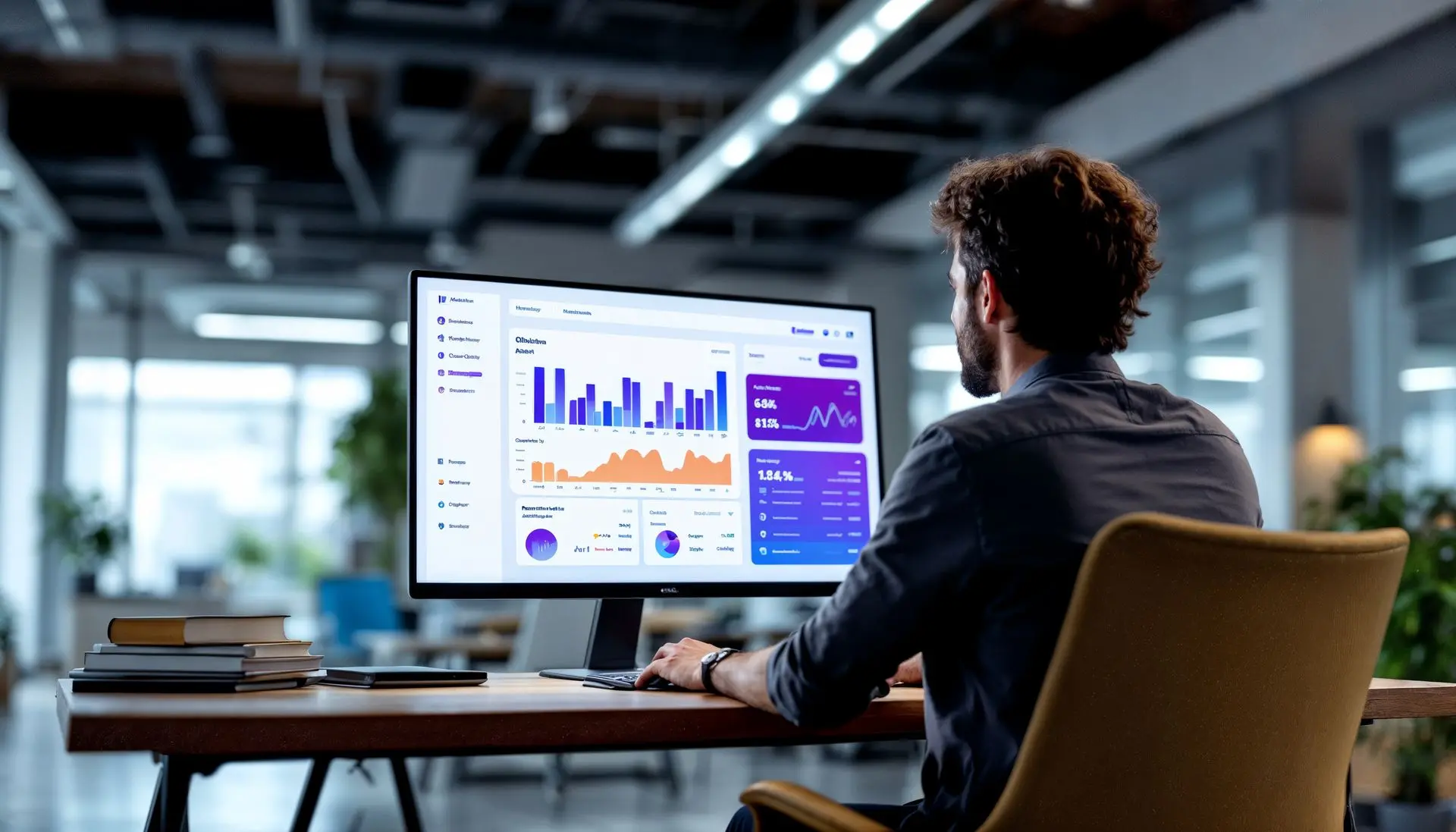
We develop management dashboards covering:
- Event profitability
- Revenue and collections
- Inventory
- Labour
- Vendors
- Cash flow
- Receivables
- Business KPIs
Dashboards can be structured around the specific reporting requirements of the event management company.
Step 6: Continuous Monitoring & Reporting
We support structured:
- Daily reporting
- Weekly performance reviews
- Monthly financial reporting
- KPI monitoring
- Exception reporting
- Management reviews
Ongoing monitoring helps ensure that reporting remains aligned with business requirements as the company grows.

Real-World Use Case – Wedding Event
Scenario
An event management company is handling a large wedding project.
Challenges
- Decoration inventory does not reconcile after the event
- Labour overtime is not captured accurately
- Vendor costs exceed the approved event budget
- Management discovers margin issues only after completion
Algebraa Solution
✔ Real-time job costing
✔ Event-wise inventory issue and return tracking
✔ Labour utilization monitoring
✔ Vendor cost tracking
✔ Budget vs actual reporting
Result
The reporting framework provides management with earlier visibility into cost overruns, inventory differences, labour utilization, and event profitability. Actual financial improvement will depend on the company's starting processes, data quality, controls, and implementation.
Why Choose Algebraa Business Solutions?
✔ Specialized accounting and reporting support for event management businesses
✔ Expertise in job costing and inventory integration
✔ Experience with 26+ accounting and ERP platforms
✔ Multi-dimensional profitability reporting
✔ Customized MIS and KPI dashboards
✔ Dedicated accounting support
✔ Outsourced accounting and bookkeeping capabilities
✔ UAE and GCC-focused financial reporting support


Take Control of Your Event Profitability Today
Event profitability depends on more than revenue. It requires accurate job costing, inventory control, labour tracking, vendor management, cash-flow monitoring, and timely financial reporting. With the right reporting framework, event management companies can gain clearer financial visibility and make better operational decisions.
Partner with Algebraa Business Solutions to transform your accounting and reporting into a strategic business advantage.
Contact us today for a consultation.