AIS Reports & Financial Analysis Services
Turn Accounting and ERP Data into Better Business Decisions
At ALGEBRAA, we provide professional Accounting Information System (AIS) Reporting and Financial Analysis Services for businesses across the UAE and GCC.
We help organisations make better use of their accounting and ERP data by converting financial information into structured reports, meaningful analysis and actionable management insights.
A well-managed Accounting Information System should do more than record transactions. It should provide business owners, CFOs and management teams with reliable information to monitor financial performance, strengthen internal controls, improve financial visibility and support strategic decision making.
Whether your business uses QuickBooks, SAP, Oracle NetSuite, Xero, Zoho Books, Sage, Tally, Odoo or another compatible accounting or ERP platform, ALGEBRAA can help analyse, structure and report your financial information more effectively.
Our AIS Reports and Analysis Services
AIS Financial Report Generation
Accurate and timely financial reports are essential for understanding the financial position and performance of a business.
Our AIS reporting services can include the preparation and analysis of key financial reports.
Balance Sheet Reporting:
Structured reporting on:
- Assets
- Liabilities
- Equity
- Working capital position
- Key balance sheet movements
Our analysis can help management better understand the financial position of the business and monitor changes over time.


Profit and Loss Reporting: Profit and Loss Statements provide insight into:
- Revenue
- Cost of sales
- Operating expenses
- Gross profit
- Net profitability
Reports can be structured by relevant business segments, departments, locations, products or other management requirements.
Cash Flow Reporting:
Cash flow analysis helps businesses understand how funds move through the organisation.
Our reporting can support the analysis of:
- Operating cash flows
- Investing activities
- Financing activities
- Cash inflows and outflows
- Working capital movements
This supports stronger Cash Flow Management and improved financial planning.
Trial Balance Analysis:
Trial Balance Reports provide an important foundation for reviewing accounting records before preparing financial statements.
Our support can include analysis of:
- General ledger balances
- Debit and credit inconsistencies
- Unusual account movements
- Unreconciled balances
- Potential classification issues
General Ledger Reporting:
Detailed General Ledger reports can provide greater visibility into accounting transactions and account movements.
These reports can support:
- Financial reviews
- Internal controls
- Audit Support
- Transaction analysis
- Management review

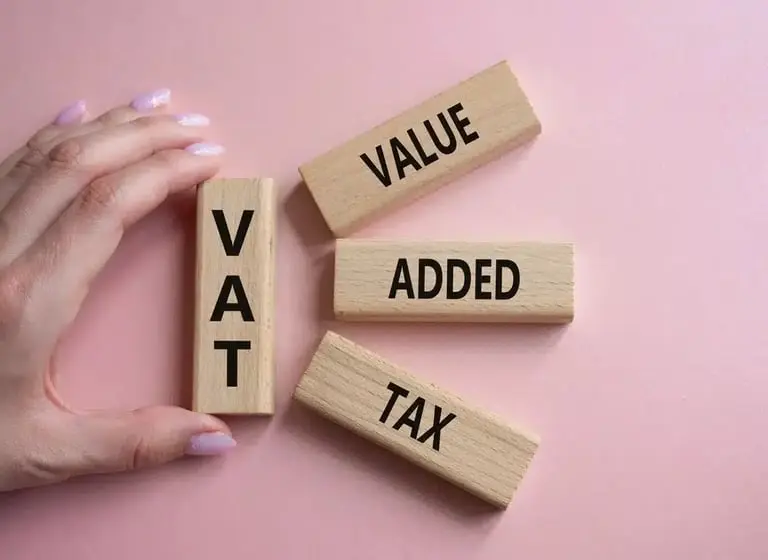
VAT and Tax Reporting Support:
We can assist with structured accounting reports and supporting information required for relevant tax and compliance processes, including:
- VAT-related reporting
- Transaction analysis
- Sales and purchase summaries
- Tax-related financial reports
- Supporting schedules
Our reporting support can help businesses maintain organised financial information for VAT Compliance and Corporate Tax Compliance requirements, subject to the applicable UAE or GCC regulatory framework.
Financial Ratio Analysis
Financial statements contain important information, but ratio analysis can make that information easier to interpret.
ALGEBRAA provides financial analysis that can help management evaluate business performance, efficiency and financial stability.
Liquidity Analysis:
Liquidity ratios can help assess the ability of a business to meet its short-term obligations.
Examples include:
- Current ratio
- Quick ratio
- Working capital indicators
Profitability Analysis:
Profitability ratios help measure how effectively a business generates returns from its operations and resources.
Analysis may include:
- Gross profit margin
- Net profit margin
- Return on assets
- Other relevant profitability indicators


Solvency Analysis:
Solvency analysis focuses on the longer-term financial stability of a business.
Relevant analysis may include:
- Debt-to-equity ratio
- Interest coverage
- Capital structure indicators
Efficiency Analysis:
Efficiency ratios help evaluate how effectively business assets and resources are being utilised.
Examples can include:
- Asset turnover
- Inventory turnover
- Receivables performance
- Other operational efficiency indicators
Variance Analysis and Performance Review
Understanding the difference between planned and actual performance is important for financial control and business planning.
Our Variance Analysis Services can include:
Budget vs. Actual Analysis:
Compare planned financial performance with actual results across areas such as:
- Revenue
- Expenses
- Profitability
- Departmental performance
- Operational costs
This helps management understand where performance is aligned with expectations and where further investigation may be required.


Expense Analysis:
Expense reporting can help identify:
- Significant cost movements
- Areas of increased expenditure
- Budget deviations
- Potential cost control opportunities
Revenue Analysis:
Revenue analysis can provide insights into:
- Revenue trends
- Product or service performance
- Period-on-period changes
- Unusual fluctuations
- Business growth patterns
Forecasting and Financial Performance Analysis
Historical financial information can support more informed planning.
Our analysis services can include:
Break-Even Analysis:
Determine the level of sales or activity required to cover relevant costs and reach the break-even point.
Financial Forecasting:
Develop structured forecasting reports based on available historical data, trends and management assumptions.
Forecasting may support:
- Revenue planning
- Expense forecasting
- Cash flow planning
- Budgeting and Forecasting
- Business growth planning
Cost-Volume-Profit Analysis:
Cost-Volume-Profit analysis helps evaluate how changes in:
- Sales volume
- Costs
- Pricing
- Contribution margins
may affect overall profitability.
This can provide useful information for pricing, budgeting and strategic decision making.


Accounting Data Optimisation and AIS Improvement
Reliable reporting depends on well-structured accounting information.
ALGEBRAA can support businesses with improvements to their accounting data and reporting environment.
Chart of Accounts Review and Setup:
A properly structured Chart of Accounts can improve Financial Reporting and Management Reporting.
We can assist with:
- Chart of Accounts review
- Account structure improvements
- Reporting-oriented account design
- Better classification of financial information
Report Automation:
Manual reporting can consume significant time and create unnecessary processing challenges.
We can help automate appropriate aspects of report generation and distribution to support:
- Periodic financial reporting
- Management Reporting
- KPI reporting
- Recurring financial analysis
Accounting Data Cleanup:
Data inconsistencies can affect the reliability of financial reports.
Our services can include support for identifying and addressing:
- Duplicate records
- Inactive accounts
- Inconsistent classifications
- Unstructured accounting data
- Historical reporting issues
The objective is to improve data integrity and strengthen the foundation for reliable reporting.


Compatible Accounting and ERP Systems
ALGEBRAA works with financial data from a range of accounting and ERP environments.
Accounting Software:
- QuickBooks
- Xero
- Zoho Books
- Sage
- FreshBooks
ERP Systems:
- SAP
- Oracle NetSuite
- Microsoft Dynamics
- Tally
- Odoo
- ERPNext
Industry-Specific Systems:
We can also work with compatible systems used in industries such as:
- Retail
- Manufacturing
- Trading
- Construction
- Logistics
- Other specialised business sectors
Our approach is designed to adapt to your existing software environment and help improve the use of available financial information.

Why Choose ALGEBRAA for AIS Reporting and Analysis?
Expert Financial Analysis:
We help convert complex accounting and ERP information into reports and analysis that management can understand and use.
Customised Financial Reports:
Every business has different reporting requirements.
Our AIS reports can be tailored based on:
- Business structure
- Industry
- Management requirements
- Reporting frequency
- Financial objectives
- Operational KPIs
Actionable Business Insights:
We do more than organise financial data.
Our objective is to help management understand:
- What is happening
- Where performance is changing
- Which financial areas require attention
- What trends may influence future decisions
Structured and Confidential Data Handling:
Financial information is handled through structured processes designed to support confidentiality and appropriate data management.
Flexible Engagement Models:
Our AIS Reporting and Financial Analysis Services can be structured for:
- One-time reporting projects
- Monthly Financial Reporting
- Recurring analysis
- Scheduled management reports
- On-demand support
- Ongoing accounting and finance support
Reporting Automation and Integration:
Where appropriate, we can help improve the efficiency of reporting processes through automation, structured workflows and integration of available financial data.


Who Can Benefit from Our AIS Services?
CFOs, Controllers and Finance Teams:
Gain access to structured Financial Reporting, detailed analysis and information that can support Internal Controls and management decision-making.
SMEs and Growing Businesses:
Access professional reporting and financial analysis support without necessarily building a large internal reporting function.
Investors and Stakeholders:
Improve transparency through timely and structured financial information and performance analysis.
Startups and Growth-Focused Companies:
Develop stronger financial visibility through reporting, forecasting, performance tracking and structured accounting information.
Businesses Using Multiple Systems:
Consolidate and analyse relevant data from accounting software, ERP systems and other compatible business platforms.


Build Better Decisions on Better Financial Information
Your accounting system contains valuable information. The challenge is converting that information into reports and analysis that support real business decisions.
ALGEBRAA's AIS Reporting and Financial Analysis Services help businesses across the UAE and GCC:
- Improve Financial Visibility
- Analyse business performance
- Monitor profitability
- Strengthen Cash Flow Management
- Track financial trends
- Compare budgets with actual results
- Improve reporting quality
- Support Internal Controls
- Enhance management decision-making
- Build a stronger foundation for business growth
From Balance Sheet analysis and Profit and Loss Reporting to variance analysis, forecasting, ratio analysis and ERP-based reporting, we help turn accounting data into meaningful financial intelligence.
Better financial information. Clearer insights. Stronger decisions.
Get Accurate and Actionable Financial Insights
Frequently asked questions
Here are some common questions about our company and services.
A.
Defining
AIS Reports and Necessity
An AIS Report focuses on the health, controls, and integrity of the entire financial data process. It provides structured output confirming that transactions are accurately processed, systems are secured, and internal controls are functioning as designed.
Financial statements report the results (P&L, Balance Sheet). AIS reports report on the process (audit trails, control effectiveness, user access), providing the necessary assurance that the financial results are reliable .
MIS Reports are forward-looking and strategic (What to do next?). AIS Reports are backward-looking and control-focused (Was the process correct?), ensuring compliance and data validity.
They are critical for audit readiness, fraud prevention, and maintaining regulatory compliance (e.g., SOX, local corporate governance requirements). They guarantee the accuracy of data flowing through the GL .
Yes. We are proficient in extracting, analyzing, and reporting on data from major systems, including SAP, Oracle, NetSuite, Dynamics 365, QuickBooks Enterprise, and Xero.
By providing pre-vetted, comprehensive reports on internal controls and system integrity, we drastically reduce the time external auditors spend on testing your IT and accounting environments.
Yes. We specialize in producing reports that validate the complex logic and allocation entries related to WIP, COGS, and IFRS 15/ASC 606 revenue recognition, ensuring calculations are compliant.
Yes. We structure our control reporting to meet the requirements of regulators and auditors across the USA, Canada, UK, Australia, and the EU, adhering to best practices for system control testing.
This report provides an itemized check of the system's ability to maintain data accuracy, primarily by reconciling subsidiary ledger balances (e.g., A/R, A/P) to the General Ledger balance .
We require read-only access to your ERP/GL transaction tables, user access logs, and the defined internal control matrix documentation .
By analyzing transaction audit trails and user activity logs, we identify patterns such as unauthorized journal entries, unusual access times, or segregated duties violations that are common red flags for fraud.
AIS reports provide objective evidence to the audit committee or board that management's stated internal controls are operating effectively in the financial system environment .
Yes. We offer specialized extraction and report-building services for legacy systems, focusing on mapping custom tables to required standard control reports.
The outcome is a set of documented assurance statements certifying that financial transactions are complete, valid, authorized, accurate, and properly classified within the system .
We generate reports that confirm the consistent application of accounting policies within the system (e.g., depreciation method, inventory valuation), which is essential for IFRS/GAAP compliance.
B.
Internal
Controls and Data Integrity
An SOD Report lists conflicts where a single user has permissions to perform incompatible functions (e.g., both initiating a vendor payment and approving the payment), a critical control weakness .
We recommend running a full SOD permissions check on a Quarterly basis, with Daily/Weekly monitoring of user activity logs to detect actual violations or usage risks .
This report provides a complete, itemized listing of every user's security role and permissions in the financial system, often required Half-Yearly for control certification by management.
Yes. We generate a Configuration Change Log Report detailing all alterations to GL accounts, vendor master files, customer master files, and pricing schemes, verifying that changes were authorized.
This report validates that all transactions up to a specific date (e.g., month-end) have been included in the GL, ensuring no transactions are incorrectly posted to the wrong period .
We generate a report isolating all journal entries posted by non-GL-specific users and those posted outside standard business hours, flagging them for detailed review on a Daily/Weekly basis.
This Daily/Weekly report tracks all items sitting in temporary suspense or clearing accounts, ensuring these balances are investigated and cleared promptly to prevent misstatement.
Yes. If your ERP connects to a subsidiary system (e.g., treasury, inventory), we generate a Control Totals Report verifying that the total transaction volume and value match exactly between systems.
We provide a detailed Usage Log Report specifically for these high-privilege accounts, listing who used them, when, and what transactions were performed, often required Monthly by internal audit.
This report verifies that all numerical sequences (e.g., invoice numbers, PO numbers, journal entry numbers) are continuous and complete, ensuring no records have been deleted or skipped .
We report on the system settings related to password strength, expiry, and complexity, documenting compliance with organizational IT control standards on a Quarterly basis .
We generate reports detailing long-standing unapplied cash receipts or payments, flagging them for investigation to ensure customer/vendor balances are accurately reflected .
This report verifies that the system's transaction history (who created, who modified, when) is complete and cannot be altered, providing assurance for the integrity of historical data.
We generate reports showing the success/failure rate of key automated controls, such as the three-way match for purchasing, identifying items that bypassed automation.
A Daily or Weekly report that validates master file data (e.g., valid GL account codes, active vendors) before large transaction batches are posted, preventing data contamination .
Yes. We isolate credit memos and discounts authorized by sales personnel, ensuring these transactions adhere to established approval thresholds and limits.
We produce reports confirming that all CapEx transactions were properly capitalized or expensed, and that all disposals were recorded, validating the fixed asset ledger integrity.
We immediately issue a Critical Control Exception Notice detailing the failure, its potential financial impact, and a recommendation for immediate remediation by your internal team.
Yes. We generate reports verifying that the chosen costing method (FIFO, WAC, Standard Cost) is applied consistently to all inventory movements, validating cost data integrity.
This report tracks who posted to sensitive GL accounts (e.g., Payroll, Tax Liability, Revenue accounts) and the frequency, ensuring account usage aligns with expected function.
C.
Regulatory
and Compliance Reporting
Our reports directly address SOX 404 requirements by documenting and testing the design and operating effectiveness of IT General Controls (ITGCs) and relevant Automated Business Process Controls.
Yes. We align our control testing and documentation to comply with local requirements, ensuring the framework is tailored to the specific jurisdiction.
We focus on access reports that document and confirm restricted access to PII and customer data within the financial system, verifying that data masking or anonymization controls are functioning.
We generate reports that confirm the base data used for tax calculations (e.g., VAT/GST on sales, WHT on payments) is accurate and consistently applied across all relevant transactions.
We provide reports verifying the integrity of inter-company transaction data and the cost allocation methodologies within the GL, which are critical inputs for transfer pricing calculations.
Yes. We structure reports to validate input data for statutory reporting, focusing on sales, purchase, and payroll data integrity required for local tax filings.
This Monthly report tracks the completion and sign-off of all critical system tasks (e.g., sub-ledger closures, reconciliations, manual adjustments) required before the GL is officially closed.
Yes. We provide specialized reports that track and monitor high-risk expenses (e.g., gifts, entertainment, customs payments) for compliance with anti-bribery regulations.
We reconcile the detailed Fixed Asset Register to the GL control accounts and verify that depreciation and amortization are calculated according to the client's documented policy.
Yes. We can generate a Control Matrix Report that explicitly links your core processes (e.g., Procure-to-Pay) to the specific system controls we are testing and reporting on.
This report confirms that all consolidation entries (e.g., inter-company eliminations, currency translation adjustments) have been performed correctly and completely in the system.
We provide assurance on the financial data used for ESG metrics (e.g., CapEx related to green initiatives, costs of compliance) by applying standard AIS controls.
The Yearly AIS report provides the conclusive, aggregated documentation needed to demonstrate effective internal controls for the entire fiscal year to external auditors and regulators.
Yes. We reconcile payroll data between the payroll system and the GL to ensure that all wages, withholdings, and tax liabilities are accurately recorded.
We generate a report detailing all unscheduled downtime, verifying that compensating manual controls were properly executed and subsequently reviewed when the system was back online.
Yes. We check the customer master file for consistent terms, valid tax identification numbers, and accurate credit limits, all of which impact financial reporting.
This report reviews the vendor master file for duplicate entries, unauthorized bank detail changes, and missing tax information, mitigating the risk of payment fraud.
We enforce a common set of AIS control reports and definitions across all global entities, ensuring all subsidiaries follow the same procedures for system control testing.
We focus on the application-layer security controls within the ERP (access, configurations) that interact with the cloud infrastructure .
We generate reports testing transactions against the expenditure matrix, flagging purchases or approvals that exceeded a user’s designated authorization limit.
D.
System
Audit and Assurance
We act as a liaison, providing the auditors with all pre-prepared, verified AIS reports (e.g., SOD, Access Logs, Control Tests), streamlining their fieldwork and reducing client disruption.
Yes. After initial reports identify deficiencies, we track the status of the remediation efforts, ensuring the fixes are implemented correctly and generating post-fix reports to prove effectiveness.
While we do not perform technical penetration testing, we work closely with your IT security team, ensuring the financial data used for the test is secure and the results are integrated into our control reports.
We perform walkthroughs and detailed sample testing on automated controls, ensuring they operate without manual intervention and produce the expected results (e.g., verifying the three-way match logic) .
This report verifies that all changes to the financial system were documented, tested, approved, and authorized according to the formal change management policy, a key ITGC requirement.
We report on the financial system's ability to maintain data integrity during backup/restore cycles, ensuring that no data corruption occurs.
A comprehensive review and testing of ITGCs are typically required Yearly for external audit assurance, with Half-Yearly internal reviews being best practice.
This report documents all SOD conflicts identified and the official compensating controls (manual review procedures) implemented to mitigate the risk.
Yes. During the transition phase, we run parallel AIS reports on both the old and new systems, providing assurance that the data conversion and new system controls are effective .
If data from a non-financial system (e.g., inventory tracking, project management) is fed to the GL, we report on the security and integrity controls of that specific interface.
This is a Yearly summary report delivered before the external audit, confirming that all required documentation, reconciliations, and control reports are complete and signed off internally.
Yes. We manage the generation of all data and reports requested by your internal audit department, ensuring their needs are met efficiently and securely.
After every major patch or update, we run a set of Post-Implementation Verification (PIV) reports to ensure no system control or reporting logic was unintentionally altered.
This report documents the testing of specific automated controls embedded within the financial application, such as input validation or calculation integrity checks.
Yes. As a Yearly deliverable, we provide a formal certification report summarizing the key findings and providing our assurance over the effectiveness of the system controls tested.
E.
Service
Frequencies and Deliverables
Daily reports focus on critical transaction monitoring, unauthorized access attempts, and control total verification for large interfaces (e.g., point-of-sale systems) .
Companies in high-volume environments (e-commerce, retail) or those with heightened fraud risk, requiring immediate alerts on system anomalies.
Weekly reports include detailed Suspense Account Tracking, GL/Sub-Ledger Reconciliation Summaries, and a summary of all high-risk user activities.
It allows for the timely investigation and clearance of reconciling items and control exceptions, preventing a massive build-up at month-end.
Month-End Control Certification. Deliverables include the final GL Balance Integrity Report, End-of-Period User Access Review, and the full Financial Close Checklist sign-off report .
It provides the evidence that the GL was closed with functioning controls, directly supporting the reliability and accuracy of the Monthly financial statements.
Quarterly service includes the comprehensive Segregation of Duties (SOD) Analysis, a deep-dive review of master data changes, and compliance checks against regulatory deadlines.
Mid-Year Control Audit. This involves formal testing of application controls and ITGCs, similar to a lighter version of the annual audit preparation.
The full Year-End Audit Readiness Package: ITGC Certification, Control Deficiency Summary, Final SOD Report, and all supporting documentation for the external auditors.
AIS reports are typically delivered within 1 to 2 business days after the GL data is finalized, as they rely on the post-closing balance data.
Yes. We work with your risk profile to define the materiality thresholds (e.g., $5,000 for journal entries) above which transactions are flagged for review.
Yes. We maintain a log of all control exceptions and provide a Cumulative Control Failure Report on a Quarterly basis to identify systemic weaknesses.
Our India-based team works during times that often allow for overnight processing of your reports (USA, Canada, UK, EU), ensuring deliverables are ready at the start of your business day.
Absolutely. We tailor the frequency to the risk. High-risk checks (access logs) are Daily, while lower-risk checks (SOD) are Quarterly.
Reports are delivered via a secure, encrypted portal or directly to your designated secure email, ensuring client confidentiality.
F.
Technology
and Integration
We use highly restricted, read-only user IDs and secure connection methods (e.g., VPN, dedicated VM) provided by your IT team, ensuring we only extract, not modify, data.
We utilize specialized audit analytics software and scripting to efficiently parse, structure, and test billions of system log entries and transaction records against control rules.
Yes. If data is exchanged via API, we report on the control totals and error logs generated by the API, ensuring data transfer is complete and accurate.
Yes. We can format the clean, control-validated AIS data into a structured output (CSV, JSON, SQL scripts) ready for ingestion into your internal data warehouse.
We first establish a universal Data Mapping Standard, creating a translation layer to ensure that similar data fields from disparate systems are treated consistently in our reports.
We perform a formal review of the underlying SQL or report writer logic for critical custom reports, ensuring they pull data reliably and accurately before we rely on their output.
Yes. Our advisory service includes recommendations on optimizing GL account hierarchies, user roles, and system configurations to enhance the efficiency of future AIS reporting.
We treat the entire ecosystem as the AIS, implementing interface controls (like control totals) at every data handoff point between the integrated systems.
We provide an Access Termination Assurance report, confirming that our access credentials are immediately revoked upon completion or termination of the engagement .
Yes. We employ Robotic Process Automation (RPA) tools where appropriate to perform repetitive checks, such as matching external bank statements to GL entries, enhancing speed and accuracy.
G.
Pricing
and Engagement
Pricing is based on the complexity of the ERP system, the volume of annual transactions, and the required depth/frequency of control testing (e.g., Daily vs. Quarterly SOD).
We typically offer a fixed monthly fee based on the defined scope and frequency, providing budget predictability for core control reporting.
Onboarding includes a System Discovery and Control Documentation phase where we map your key processes, define the control objectives, and gain secure access to the required data logs.
Yes. We recommend starting with a paid pilot project focused on a high-risk area (e.g., SOD or Month-End Close Controls) to demonstrate our capability before full service deployment.
AIS reporting is a continuous assurance function. We recommend a minimum Yearly contract to ensure coverage for the full fiscal year and the subsequent external audit cycle .