Complete Restaurant Accounting System
POS, Inventory, Recipe Costing & Financial Integration Framework
Restaurants across the UAE and GCC operate in a fast-paced, high-volume environment where sales transactions, inventory movements, supplier purchases, payroll activities, and customer payments occur continuously. Without a properly integrated restaurant accounting system, businesses can face inaccurate financial reporting, uncontrolled food costs, inventory discrepancies, revenue leakage, VAT compliance issues, and reduced profitability.
At ALGEBRAA Dubai, we implement complete restaurant accounting systems that integrate Point of Sale (POS), inventory management, recipe costing, accounting, and financial reporting into one structured financial framework.
Our approach gives restaurant owners and management teams greater financial visibility, stronger internal controls, accurate cost tracking, and reliable information for strategic decision-making.
The Four Pillars of a Modern Restaurant Accounting System
A well-designed restaurant accounting structure brings together four essential operational systems:
1. POS System
2. Inventory Management System
3. Recipe Costing System
4. Accounting & Financial Reporting System
When these systems are properly configured and integrated, financial data can move efficiently from daily operations into accurate accounting records and management reports.

1. POS System Integration for Accurate Revenue Management
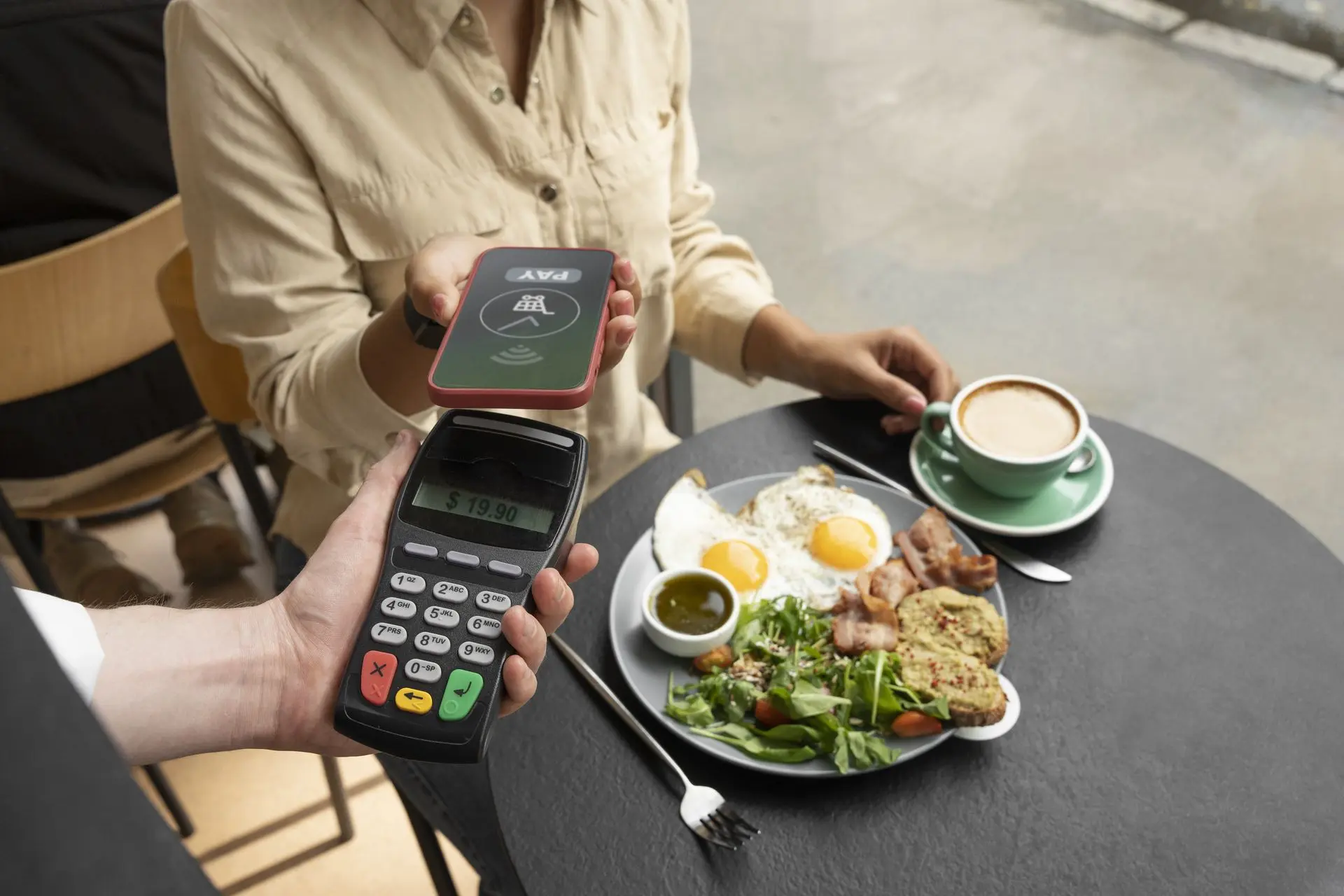
The Point of Sale system is one of the primary sources of financial data for a restaurant. A properly configured POS system captures transactions such as:
- Dine-in sales
- Takeaway orders
- Online delivery orders
- Catering revenue
- Discounts and promotional offers
- VAT and applicable service charges
- Cash, card, and digital payment transactions
POS Accounting Workflow
Our restaurant accounting framework helps businesses:
- Capture daily sales transactions.
- Categorize revenue by product, department, or sales channel.
- Record discounts and promotional adjustments accurately.
- Identify VAT and other applicable tax liabilities.
- Transfer structured POS data into the accounting or ERP system.
- Reconcile recorded sales with payment settlements and bank deposits.
This structured integration reduces manual processing and supports accurate revenue recognition, VAT compliance, and reliable financial reporting.

2. Inventory Management System for Better Ingredient Control

Inventory is one of the most important cost-control areas in restaurant operations. Changes in ingredient prices, stock consumption, wastage, and purchasing directly affect profitability. Restaurant inventory may include:
- Raw food ingredients
- Beverages
- Packaging materials
- Kitchen supplies
- Consumables and operational materials
Inventory Accounting Workflow
A structured inventory accounting process includes:
- Recording supplier purchases.
- Maintaining accurate ingredient and stock records.
- Tracking stock consumption.
- Monitoring transfers between branches, kitchens, or storage locations.
- Performing periodic stock counts and verification.
- Reconciling physical inventory with system records.
Accurate inventory management helps restaurants improve stock visibility, reduce wastage, control purchasing, and maintain more reliable cost of goods sold and inventory valuation.

3. Recipe Costing System for Menu Profitability

A recipe costing system calculates the cost of preparing each menu item based on ingredient quantities and current purchase prices.
Recipe Costing Process
Our framework supports:
- Defining the ingredients used in each recipe.
- Setting standard quantities and portions.
- Linking recipes with inventory items.
- Calculating the cost per dish.
- Monitoring changes in ingredient prices.
- Reviewing menu profitability and margins.
When ingredient prices change, the costing structure can be updated to reflect the impact on individual menu items. This gives restaurant owners clearer visibility into dish-level profitability, food cost percentages, and menu pricing decisions.
4. Accounting & Financial Reporting System
The accounting and ERP system consolidates financial information from the POS, inventory, recipe costing, purchasing, payroll, and payment processes. Core accounting functions may include:
- Revenue accounting
- Cost of goods sold tracking
- Inventory valuation
- Accounts Payable management
- Accounts Receivable management
- Expense accounting
- Payroll processing
- Bank and payment reconciliation
- VAT compliance
- Corporate Tax compliance
- IFRS-based financial reporting
The system can generate essential financial reports, including:
- Profit and Loss Statement
- Balance Sheet
- Cash Flow Statement
- Food Cost Analysis
- Labour Cost Reports
- Inventory Reports
- Menu Profitability Reports
- Management Reporting and MIS Reports

Step-by-Step Restaurant Accounting Integration Framework
At ALGEBRAA Dubai, we follow a structured approach to create an integrated restaurant accounting ecosystem.

Step 1 – Restaurant Chart of Accounts Design
We develop a restaurant-specific Chart of Accounts that reflects the financial structure of the business. Typical categories may include:
- Food Sales
- Beverage Sales
- Delivery Revenue
- Ingredient Purchases
- Cost of Goods Sold
- Kitchen Expenses
- Labour Costs
- Rent and Occupancy Costs
- Marketing Expenses
- Administrative Expenses
A properly structured Chart of Accounts improves financial classification and supports detailed management reporting and financial analysis.
Step 2 – POS to Accounting or ERP Integration
The POS system is integrated with the accounting or ERP platform to improve the flow of sales information. The integration can capture:
- Daily sales
- Revenue categories
- VAT liabilities
- Payment methods
- Discounts
- Promotions
- Service charges
This reduces manual data entry and strengthens financial accuracy and internal controls.


Step 3 – Inventory to COGS Integration
Inventory and accounting systems should work together to provide better visibility into ingredient consumption and costs. The process can include:
- Recording ingredient usage.
- Calculating the cost of goods sold.
- Updating inventory balances.
- Reviewing stock variances.
- Monitoring food cost percentages.
This supports more accurate cost tracking and profitability measurement.
Step 4 – Recipe Costing Integration
Recipe costing information is integrated with inventory and purchasing data to provide more accurate menu-level financial analysis. Key insights may include:
- Dish profitability
- Gross margin by menu item
- Food cost percentage
- Ingredient price movements
- Menu margin analysis
These insights help management review menu pricing and identify opportunities to improve profitability.


Step 5 – Payment Reconciliation Automation
Restaurants receive payments through multiple channels, including:
- Cash
- Credit cards
- Debit cards
- Digital wallets
- Online payment gateways
- Food delivery platforms
- Bank transfers
Our accounting process reconciles POS transactions, payment settlements, and bank deposits to identify discrepancies and maintain accurate revenue records. Regular reconciliation supports stronger cash flow management, internal controls, and financial accuracy.
Step 6 – Financial Dashboard & MIS Reporting
Once operational and accounting systems are integrated, restaurant owners can access structured financial dashboards and MIS reporting. Key performance indicators may include:
- Daily and monthly revenue
- Food cost percentage
- Labour cost percentage
- Prime cost
- Inventory turnover
- Menu profitability
- Gross profit margin
- Cash flow position
- Budget versus actual performance
These reports provide management with the financial visibility needed for faster and more informed decision-making.

Benefits of an Integrated Restaurant Accounting System
Implementing an integrated accounting framework provides several important benefits.

- Improved Financial Accuracy: Connecting operational and financial systems reduces duplicate data entry and improves the reliability of accounting records and financial reports.
- Stronger Food Cost Control: Recipe costing and inventory integration provide better visibility into ingredient consumption, price changes, and food cost performance.
- Better Inventory Visibility: Real-time or regularly updated inventory records help businesses identify stock variances, wastage, and potential inventory losses.
- Greater Operational Efficiency: Automation reduces repetitive manual accounting work and allows finance teams to focus on analysis and financial control.
- Better VAT and Corporate Tax Compliance: A structured accounting system helps maintain organized financial records that support VAT Return Filing, Corporate Tax compliance, and regulatory reporting requirements in the UAE.
- Data-Driven Strategic Decision Making: Reliable financial and operational data helps restaurant owners make informed decisions regarding pricing, purchasing, staffing, expansion, and profitability.
Software and ERP Expertise
At ALGEBRAA Dubai, we provide ERP Consulting, accounting system configuration, and financial process integration for restaurant and hospitality businesses. Our team supports the integration of:
- Restaurant POS systems
- Inventory management platforms
- Accounting software
- ERP systems
- Payroll systems
- Financial reporting tools
Our solutions can be adapted for:
- Independent restaurants
- Café and coffee shop chains
- Quick-service restaurants
- Fine dining establishments
- Food franchises
- Cloud kitchens
- Multi-location restaurant groups


Why Restaurants Choose ALGEBRAA
Restaurant and hospitality businesses choose ALGEBRAA for integrated accounting and financial management solutions that combine industry knowledge with technology and financial control. Our capabilities include:
✔ Restaurant-specific Accounting Services
✔ Bookkeeping Services and Accounting Outsourcing
✔ POS and ERP Integration
✔ Inventory Accounting and Reconciliation
✔ Recipe Costing and Menu Profitability Analysis
✔ Financial Reporting and MIS Reporting
✔ VAT Compliance and VAT Return Filing Support
✔ Corporate Tax Compliance Support
✔ CFO Services and Financial Analysis
✔ Internal Controls and Process Improvement
Our objective is to help restaurant businesses achieve greater financial visibility, stronger cost control, improved regulatory compliance, and sustainable profitability.
Conclusion
A complete restaurant accounting system brings together POS, inventory management, recipe costing, payment reconciliation, accounting, and financial reporting within one structured financial framework. With the right systems and processes in place, restaurant businesses can:
- Monitor financial performance with greater accuracy.
- Control food and labour costs.
- Improve inventory visibility.
- Optimize menu pricing and profitability.
- Strengthen VAT and Corporate Tax compliance.
- Reduce manual accounting processes.
- Improve cash flow management.
- Make more informed strategic decisions.
ALGEBRAA Dubai helps restaurants across the UAE and GCC implement integrated accounting systems, ERP solutions, outsourced accounting services, and financial reporting frameworks designed to support operational efficiency and long-term business growth.

Got an Idea? Let’s Make It Happen