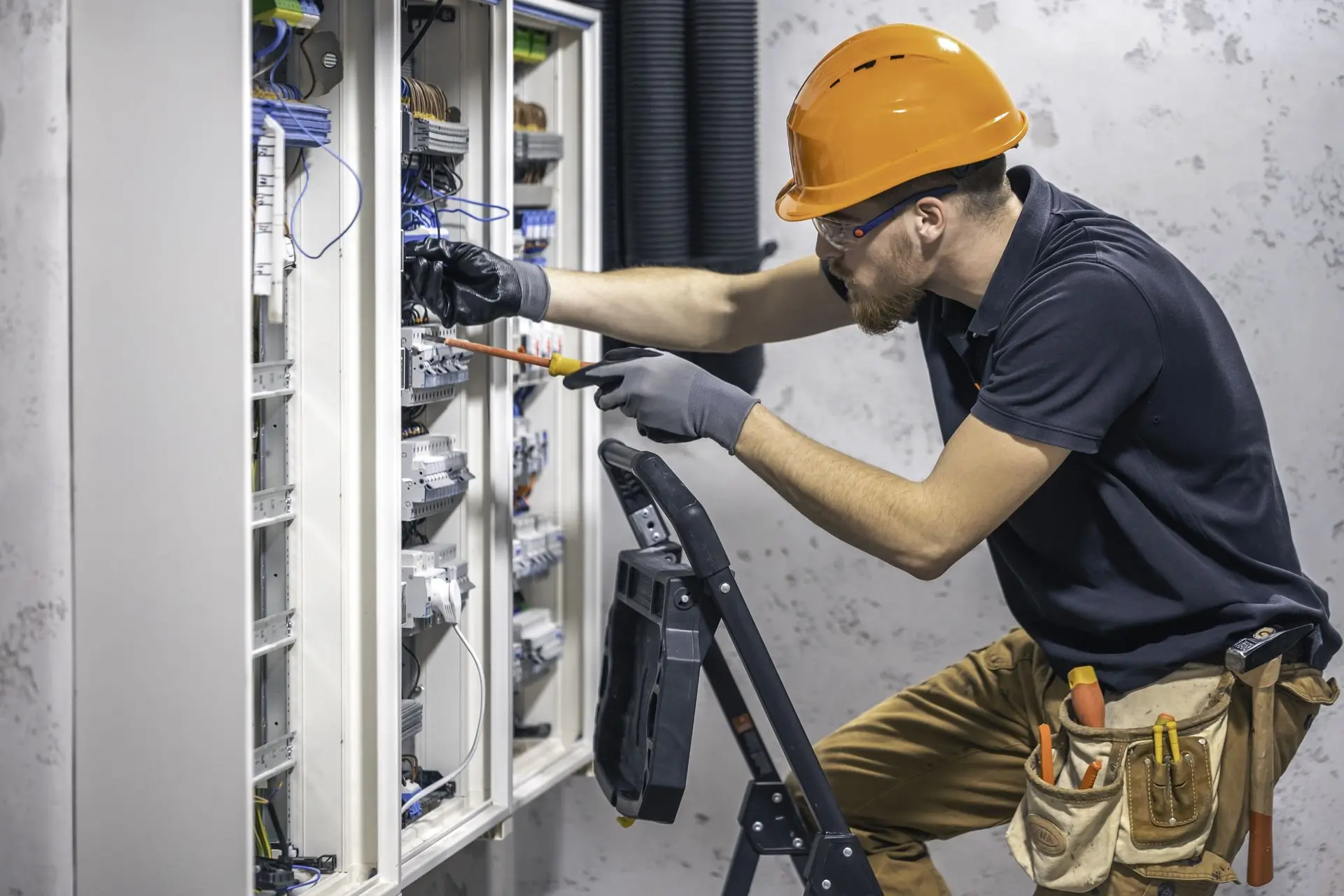
Electrical Contractors Accounting & Software Problems – Expert Solutions in UAE
Electrical contractors in the UAE operate across a complex environment involving inventory-heavy projects, multiple job sites, labour-intensive operations, Annual Maintenance Contracts (AMCs), service divisions and subcontractors. Managing the finances of such a business requires more than routine bookkeeping. Accurate job costing, inventory accounting, labour allocation, VAT compliance, Corporate Tax compliance and management reporting are essential for maintaining profitability and financial visibility.
At ALGEBRAA, we help electrical contractors transform fragmented accounting and operational systems into structured, automated and insight-driven financial ecosystems.
Key Accounting & Software Challenges for Electrical Contractors

Disconnected Software Systems
Problem: Electrical contractors may use separate systems for:
- Inventory management
- Accounting
- CRM
- Field service
- AMC management
- Payroll
- Job management
When these systems do not communicate in real time, businesses face duplicate data entry and reconciliation problems.
Impact:
- Financial inaccuracies
- Delayed management reporting
- Data duplication
- Poor financial visibility
- Slower decision-making
Our Solution
Step 1: Software Mapping
We identify your existing:
- ERP
- Accounting software
- Inventory system
- Field service software
- AMC module
- Payroll system
Step 2: Integration Strategy
We design API or middleware-based integration with a structured data flow:
Inventory → Job → Invoice → Accounting
Step 3: Chart of Accounts Alignment
We standardize GL codes and accounting classifications across systems.
Step 4: Automation Rules
Where supported by the system, we configure automated posting for:
- Job material consumption
- Labour allocation
- Revenue recognition
- Project-related costs
Step 5: Reconciliation Dashboard
Management receives regular synchronization and exception reports to identify data mismatches quickly.

Inventory Costing & Job Consumption Issues
Electrical contractors often manage significant quantities of cables, conduits, switchgear, breakers, lighting equipment and other electrical components. Without accurate job-wise consumption tracking, inventory and profitability figures can quickly become unreliable.
Problem:
- Materials issued to projects are not accurately tracked
- Purchases are not properly linked to jobs
- Material returns are not recorded correctly
- Inventory consumption is disconnected from billing
Impact:
- Profit leakage
- Incorrect job costing
- Stock discrepancies
- Excess inventory
- Working capital tied up in slow-moving materials
Our Solution:
Functional Setup
We establish:
- Item-wise tracking
- Batch/serial tracking where required
- Inventory categories
- Job and project codes
- Appropriate costing methodology
Inventory can be classified into:
- Fast-moving stock
- Slow-moving stock
- Non-moving stock
- Dead stock
Configuration
We configure processes for:
- Job-wise material consumption
- Inventory-to-job mapping
- Appropriate inventory valuation
- Material issue posting
- Material return adjustments
Advanced Controls
Regular reporting can include:
- Stock reconciliation
- Inventory aging
- Consumption variance analysis
- Job-wise material consumption
- Slow-moving and dead-stock analysis

Labour Costing & Productivity Tracking

Labour represents a significant component of electrical contracting costs. Without accurate technician and project-level tracking, management may not know the true cost of delivering each job.
Problem:
- Labour costs are not allocated accurately by project
- Idle time is not tracked
- Permanent and contract labour are not differentiated
- Technician hours are recorded inconsistently
Impact:
- Underestimated project costs
- Reduced margins
- Poor workforce utilization
- Inaccurate project profitability
Our Solution:
Step 1: Labour Categorization
We classify labour into appropriate categories, such as:
- Skilled labour
- Unskilled labour
- Permanent employees
- Contract labour
Step 2: Digital Logbook System
Technicians can be assigned:
- Employee IDs
- Job codes
- Project locations
- Daily working hours
Step 3: Cost Allocation
We establish a structured calculation of:
Labour Hours × Applicable Cost Rate = Job Labour Cost
Step 4: Idle Time Tracking
We identify non-productive hours and analyze their effect on project margins.
Step 5: Productivity Analytics
Management reporting can include:
- Peak-hour productivity
- Day-wise performance
- Labour utilization
- Labour cost per job
- Idle-time analysis

Subcontractor Accounting Complexity

Electrical contractors frequently engage subcontractors for specialist installation, testing, maintenance and project-related work.
Problem:
- Subcontractor invoices are not linked to specific projects
- Milestone billing is difficult to track
- Retention amounts are not properly monitored
- Invoice verification is inconsistent
Impact:
- Overpayments
- Incorrect project profitability
- Weak cost control
- Delayed reconciliation
Our Solution:
We establish a structured subcontractor accounting framework covering:
- Vendor-to-project mapping
- Job-wise subcontractor costs
- Milestone-based billing
- Retention accounting
- Invoice approval workflows
Automation can connect:
Subcontractor Invoice → Project Cost → Payable
This provides stronger control over project expenditure and outstanding subcontractor obligations.

Multi-Dimensional Profitability Analysis (CRITICAL)
5. Multi-Dimensional Profitability Analysis
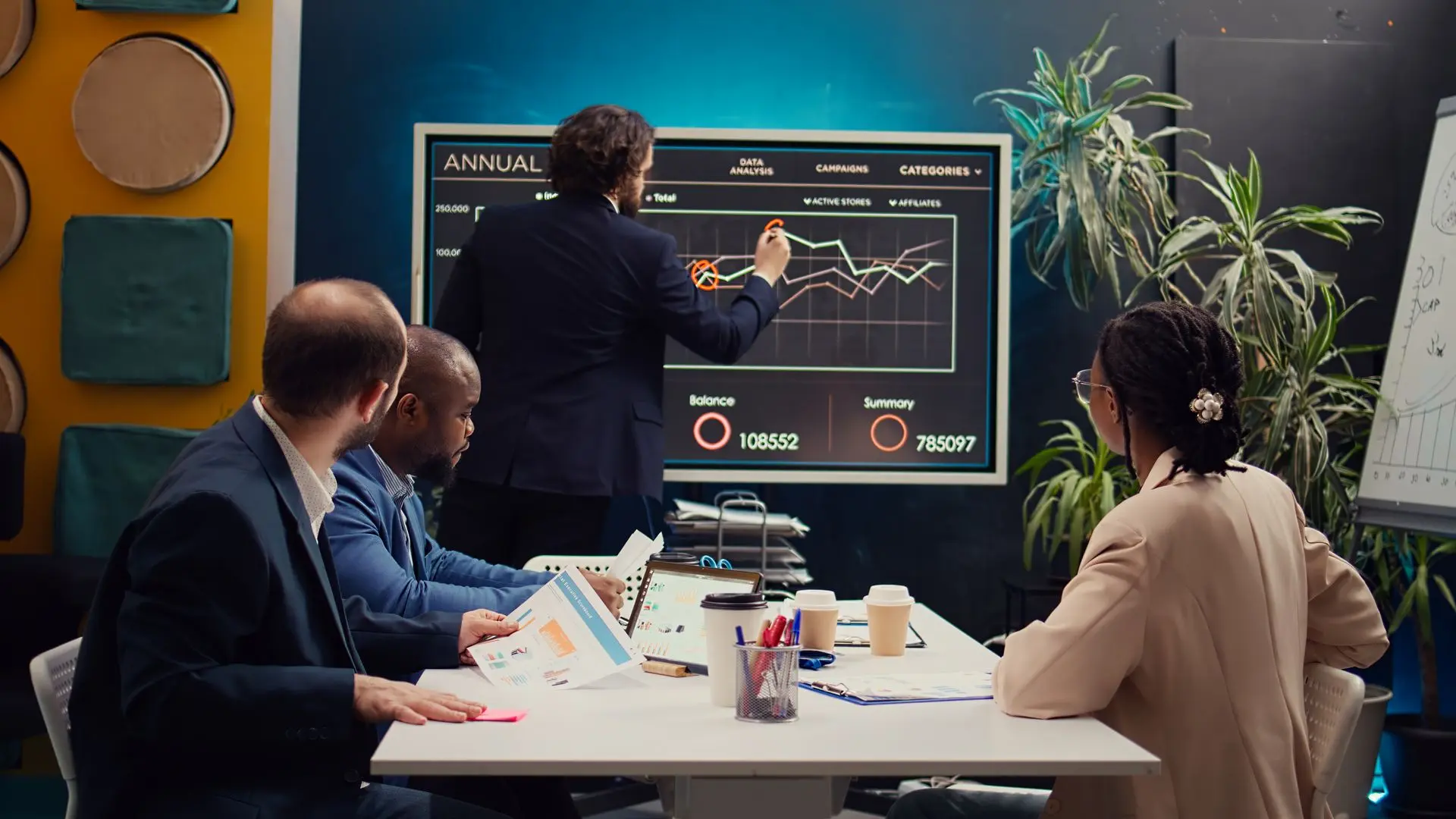
Electrical contractors should not rely solely on overall P&L figures. Profitability needs to be analyzed from multiple operational dimensions.
Required Profitability Views:
- Job-wise profitability
- Customer-wise profitability
- Asset-wise profitability
- Inventory-wise profitability
- Invoice-wise profitability
- Department-wise profitability
Additional Analysis:
We can provide visibility into:
- Fast- versus slow-moving inventory
- Dead stock
- AMC profitability
- Service department efficiency
- Project margins
- Labour utilization
Our Implementation Approach:
1. Define Cost & Profit Centers
We structure appropriate cost centers and profit centers.
2. Enable Multi-Dimensional Tagging
Transactions can be tagged against:
- Job
- Project
- Location
- Department
- Asset
- Customer
3. Build Automated MIS Reports
Management reports can include:
- Job profitability
- Department-wise P&L
- Inventory aging
- Customer profitability
- Project cost variance
This gives business owners greater financial visibility for strategic decision-making.

Daily Payment Reconciliation Challenges

Electrical contractors may receive payments through multiple channels, including:
- Bank transfers
- Credit cards
- Debit cards
- Payment gateways
- Cash collections
Problem:
High transaction volumes can create:
- Cash-flow mismatches
- Reconciliation delays
- Unidentified receipts
- Revenue reporting discrepancies
Our Solution:
We establish an automated reconciliation workflow:
Payment Gateway / Bank Feed → Transaction Matching → Reconciliation → Exception Report
This can include:
- Payment gateway integration
- Bank-feed imports
- Automated matching rules
- Exception reporting
- Outstanding reconciliation
Department-Wise Operational Complexity
Electrical contracting businesses may operate several revenue and cost divisions simultaneously.
Typical Departments:
- Inventory
- AMC Contracts
- New Projects
- Existing Projects
- Service Division
- Spare Parts Sales
- Accessories
Problem:
When departments operate through disconnected processes, management lacks centralized visibility.
Our Solution:
We establish a centralized ERP and accounting structure with:
- Department-wise accounting
- Unified financial reporting
- Role-based dashboards
- Cost-center tracking
- Profit-center reporting
This helps management understand which divisions generate revenue, consume resources and contribute to profitability.

OUR EXPERT APPROACH (ALGEBRAA FRAMEWORK)

1. Requirement Gathering
Our process starts with understanding how your electrical contracting business actually operates. We assess:
- Business processes
- Accounting workflows
- Project lifecycle
- Inventory movement
- Labour allocation
- AMC processes
- Existing software
- Reporting requirements
We then identify gaps and potential profit leaks.
2. System Design & Architecture
We design:
- Customized accounting structures
- Chart of Accounts
- Cost centers
- Profit centers
- ERP workflows
- Reporting architecture


3. Implementation & Integration
We assist with:
- Software configuration
- ERP integration
- Workflow implementation
- Automation setup
- Accounting process standardization
4. Continuous Accounting Support
Our ongoing services can include:
- Daily bookkeeping
- Bank reconciliation
- Monthly closing
- Financial reporting
- MIS reporting
- VAT-related accounting support
- Corporate Tax accounting support


5. Advanced Analytics & Decision Support
We convert accounting data into management intelligence through:
- Profitability analysis
- Cost optimization
- KPI dashboards
- Project variance reporting
- Labour productivity analysis
- Inventory analytics
Our Services for Electrical Contractors
Outsourced Accounting:
- End-to-end accounting support
- Financial reporting
- Management reporting
- Compliance-focused accounting processes
- Month-end closing
Outsourced Bookkeeping:
- Daily transaction recording
- Bank reconciliation
- Ledger maintenance
- Accounts Payable
- Accounts Receivable
Inventory Accounting:
- Inventory valuation
- Job-wise consumption
- Stock reconciliation
- Inventory aging
- Slow-moving and dead-stock analysis
Job Costing & Project Accounting:
- Project cost tracking
- Labour costing
- Material costing
- Subcontractor costing
- Job-wise profitability
- Budget versus actual analysis
ERP & Software Integration:
We help businesses connect accounting, inventory, project and operational systems to reduce manual data entry and improve financial visibility.


Flexible Engagement Options
Our accounting support can be structured according to your operational requirements:
- Daily
- Weekly
- Bi-weekly
- Monthly
- Quarterly
- Half-yearly
- Yearly
Software Compatibility
ALGEBRAA works with 26+ global accounting and ERP platforms, including:
- QuickBooks
- Xero
- Zoho Books
- Tally
- SAP
- Oracle
- NetSuite
- Odoo
- Customized ERP systems
Our approach is designed to work with your existing technology wherever practical, rather than requiring unnecessary software replacement.


Industry Expertise
ALGEBRAA supports businesses across multiple industries, with specialized capabilities for electrical contractors including:
- Industrial electrical contractors
- Commercial electrical contractors
- Electrical maintenance contractors
- AMC-based service providers
- Service and repair businesses
- Project-based contracting companies
Why Choose ALGEBRAA?
✔ Industry-specific accounting and project-costing expertise
✔ Strong ERP and software integration capability
✔ Automation-focused accounting processes
✔ Real-time financial and management reporting
✔ Job-wise and department-wise profitability analysis
✔ Inventory and labour cost control
✔ Support for UAE VAT and Corporate Tax accounting processes
✔ IFRS-oriented financial reporting support where applicable
✔ Flexible outsourced accounting engagement models
✔ UAE and GCC-focused business support


The Final Result for Your Electrical Contracting Business
With a properly structured accounting and ERP framework, your business can achieve:
- More accurate job costing
- Better inventory control
- Improved labour utilization
- Real-time profitability visibility
- Automated accounting workflows
- Stronger management reporting
- Better cash-flow visibility
- Improved regulatory compliance
- More informed strategic decisions
- Greater potential for sustainable profit growth
Turn Your Electrical Operations Into a Financially Controlled Business
Your ERP and accounting systems should provide more than transaction records. They should show where your money is going, which projects are profitable, where costs are increasing and which areas require management attention.
ALGEBRAA combines outsourced accounting, bookkeeping, project accounting, ERP integration and management reporting to help electrical contractors build stronger financial controls and operate with greater confidence across the UAE and GCC.